By: Cherie Lucas, PhD, BPharm, GradCertEduStu (Higher Ed), FPS, SFHEA, Arcelio Benetoli, BPharm, MSc, PhD., Andi Hermansyah, S. Farm., M. Sc., Ph.D., Apt, and Ramesh Walpola, BPharm, PhD.
Authentic assessment in pharmacy education refers to evaluation methods that closely mimic real-world pharmacy practice. This enables students to demonstrate their skills, attributes, and competencies in practical, profession-aligned contexts applying knowledge and skills in scenarios pharmacists commonly encounter, moving beyond traditional knowledge-based theoretical examinations.
In pharmacy education, authentic assessment aligns with key features that include real-world relevance, performance-based tasks, feedback and reflective practice-oriented activities. These tasks not only test theoretical knowledge but also assess students’ ability to perform in complex, dynamic situations, typical of pharmacy practice. Feedback—both self- and peer-reviewed and engagement with reflective practice (reflecting on one’s learning and practice)1, 2—becomes a vital component of this approach, allowing students to refine their professional skills continuously.
Table 1 outlines examples of authentic assessments in pharmacy education, which may include simulated patient and health professional interactions, authentic case studies and scenarios, portfolio-based tasks, Objective Structured Clinical Examinations (OSCEs), and capstone projects, such as health promotion initiatives and community or industry-based projects. Each of these tasks places students in situations where they apply their learning practically and receive structured feedback to support growth.
The role of technology in authentic assessments
Advanced technologies are changing the landscape of educational assessments. For example OSCEs can be conducted virtually, portfolios are now digital, virtual simulation and the use of the metaverse in training and assessment are now options for educators. These options have further enhanced the scope of authentic assessment (given that AI is here to stay and technology is evolving fast), allowing more flexible, scalable solutions for contemporary pharmacy education.
Table 1 Authentic Assessments in Pharmacy Education
| Assessment | Description | Skills Alignment |
| Authentic Case Studies | These are scenarios based on real-world cases and may involve other aspects such as ethical reasoning or interprofessional collaboration.3 | Develops critical thinking, ethical decision-making, and an understanding of typical, rare and/or complex clinical case scenarios. |
| OSCEs | OSCEs involve a series of stations, each designed to test a specific skill or set of skills relevant to pharmacy practice. This assessment type can be face-to-face or virtual. Students rotate through these stations, completing tasks under timed conditions while being observed by trained evaluators. | OSCEs evaluate core competencies such as clinical decision-making, patient-centered care, communication, professionalism 4 (leads to professional identity formation) 5 and reflective practice.2 |
| Portfolio-based activities | Portfolio-based tasks in pharmacy education are typically a curated collection of a student’s goals, work, achievements, and reflections, gathered over the course of their studies. Portfolios enable students to document their progress and demonstrate and reflect on their competencies and professional growth. Examples also include describing ethical dilemmas that students encounter on clinical placements and what they had learned or change for future practice. | Builds a portfolio of time stamped artefacts aligned to competency standards, tracks the learning and supports lifelong learning. Develops reflective practice skills. 2 |
| Experiential Learning | Experiential learning assessments can be conducted in many ways. It could be as simple as a student discussing an experience or case with a preceptor to more complex observational assessments. Given these assessments are conducted in the workplace, they can authentically replicate real world experiences that students may have upon graduation. One challenge with assessment during experiential learning opportunities is that the assessor may be a practitioner who is not trained in teaching and assessment. | Demonstrates students’ ability to integrate and apply knowledge and skills developed during various stages of their program and may enable consolidation of skills at a particular stage of study. |
| Capstone projects | Typically occurs towards the end of a course/ program and integrates previous skills learned from previous courses to consolidate prior learning and current application. Examples may include conducting research in collaboration with industry and health providers, and developing a health promotion campaign. | Demonstrates students’ ability to integrate, apply and consolidate all skills developed over the course of the program to solve real world “wicked problems”. |
Integrating authentic assessment opportunities into the pharmacy curriculum can significantly enhance students’ learning and self-efficacy. By practicing skills in realistic contexts, students become better prepared for professional roles, fostering a smoother transition from academic settings to real-world pharmacy practice.
What activities are pharmacy students undertaking in your institution to mimic real-world application?
REFERENCES
1. Tsingos-Lucas C, Bosnic-Anticevich S, Schneider CR, Smith L. The Effect of Reflective Activities on Reflective Thinking Ability in an Undergraduate Pharmacy Curriculum. Am J Pharm Educ. 2016;80(4):65. https://doi.org/10.5688/ajpe80465
2. Tsingos C, Bosnic-Anticevich S, Smith L. Reflective practice and its implications for pharmacy education. Am J Pharm Educ. 2014;78(1):18. https://doi.org/10.5688/ajpe78118
3. Lucas C, Power T, Kennedy DS, Forrest G, Hemsley B, Freeman-Sanderson A, Courtney-Harris M, Ferguson C, Hayes C. Conceptualisation and development of the RIPE-N model (reflective interprofessional education-network model) to enhance interprofessional collaboration across multiple health professions. Reflective Practice. 2020;21(5):712-730.
4. Lucas C, Benetoli A. Nurturing professionalism in student pharmacists: elevating future pharmacy practice.
5. Benetoli A, Lucas C. Professionalism in Pharmacy Leading to Professional Identity Formation.
Author Bios:

Dr Cherie Lucas, PhD, BPharm, Grad Cert Edu Stud (Higher Educ), FPS, SFHEA is the Nexus Fellow (educational leadership change agent) at the School of Population Health, Faculty of Medicine and Health at the University of NSW, Sydney, Australia.
Dr Lucas also holds Adjunct Positions with the Connected Intelligence Centre, University of Technology Sydney (UTS) and Faculty of Health, UTS. Dr Lucas is a licenced pharmacist for over 34 years and currently resides on the Pharmacy Council of NSW as the Deputy President, Australia. Her educational research interests include curriculum design and instruction, developing reflective practice tools and assessment strategies to enhance student engagement, experience and learning and building artificial intelligence (AI) capability for educators and students. She has led teams in interprofessional education and reflective practice.
Dr Arcelio Benetoli is Senior Lecturer (Pharmacy Practice) at the State University of Ponta Grossa, Brazil. He also supervises research postgrad students at the State University of Maringá, Brazil. Educational scholarship interests include the use of social media in health and education and health services research. In his free time, he enjoys spending time with friends, bushwalking, and reading.

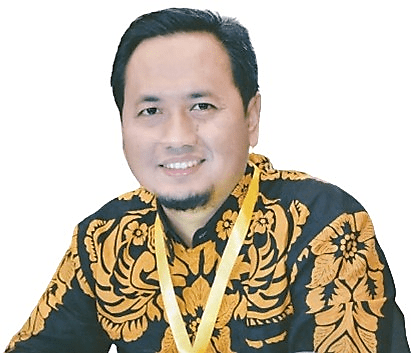
Dr. Andi Hermansyah is Associate Professor at the Faculty of Pharmacy Universitas Airlangga Indonesia. Within almost two decades in academia, he has built a promising national and international reputation in pharmacy, pharmaceutical policy and health services research in pharmacy as evidenced through 4 books and book chapters, more than 70 refereed publications, 10 national and international projects, and holds copyright of several pharmacy education products. Andi is also a registered pharmacist and a manager for quality education and business development at the university teaching community pharmacy.
Dr Ramesh Walpola is a pharmacist, certified health manager (CHM) and the Pharmacy Academic Lead & BPharmMed/MPharm Program Authority at the School of Health Sciences, UNSW Sydney. Ramesh’s current research spans a number of areas including patient and medication safety, social and administrative pharmacy, health professional education, patient experience with a focus on vulnerable populations. Ramesh is currently leading the implementation of the new pharmacy program in the School of Health Sciences, UNSW Sydney, as part of the suite of new and relaunched health professional programs.

Pulses is a scholarly blog supported by a team of pharmacy education scholars
 Pulses