
By: Cherie Lucas, PhD, and Jennifer Mazan, PharmD
Scholarship of teaching and learning (SoTL) takes on many forms.1,2 These can include research in teaching and learning, which often leads to dissemination in publications in high impact journals and/or national and international conference presentations. Scholarly blogs offer another evidence-based platform to discuss the barriers and facilitators for impactful teaching and learning.
PulsesRx has been a platform for these types of conversations since 2017, with over 200 blog posts published to date. Scholarly blogs such as PulsesRx provide a venue for impact and engagement with the readership. They can be a preferable option to discuss a process, present informative preliminary data, or create conversation with the readership about next steps in an academic journey.
This blog post will outline Editors’ insights on the top tips and considerations for authors when writing for the PulsesRx blog with impact.
Define your intent
Be clear on why you are writing this piece. For instance, is it to inform, persuade, reflect, or provoke thought as a thought leader?
Identify your audience
You have likely heard the expression, “Read the room,” because scholarly content has a greater impact when it speaks directly to readership on the same level. In the case of PulsesRx, your primary audience is pharmacy academics, other educators, and students. However, as this blog is public-facing, the audience may also include educational designers, other healthcare professionals, and of course, the general public, who may be interested in the topic at hand.
Craft a strong, catchy title
With a strict 800-word limit, crafting a title that is catchy, compelling, and searchable is essential. It should immediately capture the readers’ attention and clearly convey the blog’s focus. A few examples of diverse and catchy PulsesRx titles which have drawn readership include:
- Grab an oar: Gathering the team to navigate challenging academic waters for student success
- Can artificial intelligence teach students how to critically think?
- Metaverse or virtual reality: what is the difference?
- Climbing the ladder of scaffolded practice
Include a narrative hook
The most engaging blog posts use narrative hooks in a strategic way. The introduction is probably the most important aspect of the blog as it should “hook” the reader into reading more. Consider using a surprising fact, a provocative question, or a short anecdote. Whatever the hook is, follow it up with a clearly defined problem that requires engagement and action.
Focus on the core message
Resist the temptation to cover several topics, especially given the limited word count for PulsesRx blog posts are 800 words. Consider and outline one clear idea. It may be helpful to utilize subheadings, lists, and tables to break the blog up into digestible sections.
Use a clear structure
Following the introduction (with narrative hook), the main body of the blog outlines two or three key insights or arguments, each under separate subheadings.
Make the tone conversational and readable
Authors often forget that it is acceptable and encouraged to have a conversational language and tone in a scholarly blog. This often provides a more relaxed platform for engagement of these ideas. This differs from academic journal content which requires a certain level of language formality.
Add value
Again, consider why you are writing this post. The goal is not to describe or summarize existing literature. If it adds value and is thought provoking, then the likelihood of enhanced readership and engagement will increase. In this case, authors may be interested in how to start a blog post in PulsesRx, and as such we have provided these insights to assist their scholarly blog skills’ development. Value could come in many forms: offering insights, evidence, or examples that could be adopted, adapted, and applied to other settings. Where appropriate, include a forward-thinking approach such as trends and future implications.
Finish with a question for engagement: reflection or interactive
A conclusion provides the key take away messages that may also engage the audience with a call to action. This can be either reflective (“How might you apply this in your faculty?”) or interactive (“Share your thoughts, insights and comments.”).
Polish for impact
Often when writing, you have a flow of ideas which may not link as well with the first draft. It is often best to review your blog post with “fresh eyes” a few days later and to ask your collaborators to do the same. This process will improve flow, tone consistency, and accuracy. Finally, add any evidence either via hyperlinks to support your claims or via citations (maximum of 5) in a reference list.
How might you apply these insights to your next submission to PulsesRx?
REFERENCES
1. Prosser, M “The Scholarship of Teaching and Learning: What is it? A Personal View,” International Journal for the Scholarship of Teaching and Learning: 2008; Vol. 2: No. 2, Article 2.
Available at: https://doi.org/10.20429/ijsotl.2008.020202
2. Felten, P. “Principles of Good Practice in SoTL”. Teaching and Learning Inquiry 2013: 1 (1):121-25. https://doi.org/10.20343/teachlearninqu.1.1.121.
Author Bios:
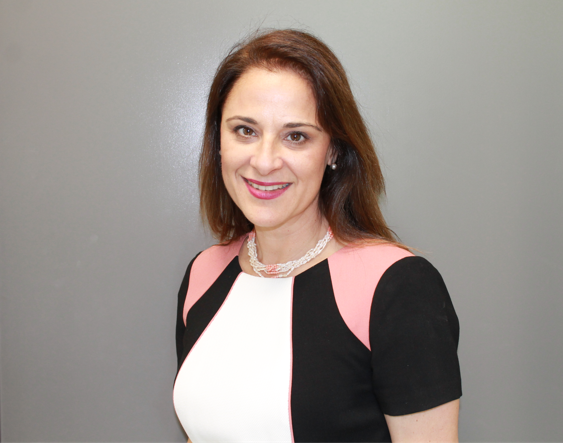
Dr Cherie Lucas, PhD, BPharm, Grad Cert Edu Stud (Higher Educ), FPS, SFHEA is one of the Editors and peer coaches for PulsesRx. Dr Lucas is also a Nexus Fellow and Lead in Student Professional Development at the School of Population Health, Faculty of Medicine and Health at the University of NSW, Sydney, Australia.
Dr Lucas also holds an Adjunct Fellow position with the University of Technology Sydney (UTS), Faculty of Health, UTS. Dr Lucas is a licenced pharmacist for over 35 years and currently resides on the Pharmacy Council of NSW as the Deputy President, Australia. Her educational research interests include curriculum design and instruction, developing reflective practice tools and assessment strategies to enhance student engagement, experience and learning and building artificial intelligence (AI) capability for educators and students. She has led teams in interprofessional education and reflective practice. Outside of academia, Dr Lucas enjoys cooking, painting and visiting art gallery exhibitions.
Dr. Jennifer Mazan is a Professor of Pharmacy Practice at Midwestern University College of Pharmacy, where she serves as course director for multiple skills-based courses. She is also an Editor and peer coach for PulsesRx. Dr. Mazan is committed to helping students develop and master the essential skills required for success in their Introductory and Advanced Pharmacy Practice Experiences (IPPE and APPE). Her scholarly interests focus on the design and assessment of effective teaching strategies for pharmacy skills, including patient counselling, medication error disclosure and veterinary pharmacy. Outside of academia, Dr. Mazan enjoys painting, cooking, and spending time with her family.

Pulses is a scholarly blog supported by a team of pharmacy education scholars
 Pulses