
By: Jaxon Carter, PharmD Candidate, Dr. Ashley Castleberry, Pharm.D., M.Ed., W. Renee’ Acosta, RPh, MS, and Dr. Jenna Summerlin, PharmD
What happens when pharmacy students struggle to meet critical milestones? Remediation has become a key strategy—but how do programs balance rigor with student well-being and ensuring APPE readiness? A thoughtfully designed remediation process can simultaneously enhance pre-APPE readiness and support student well-being.
Programs have the autonomy to create remediation processes that work best for their students. Schools develop their remediation plans with the goal of supporting learning while minimizing emotional strain.1 Evidence demonstrates that student involvement in their own learning process, paired with individualized faculty feedback, produces stronger academic outcomes.1 Remediation supported by assigned faculty has been associated with improved course performance, higher exam and grade scores, and increased on‑time graduation rates.1-3
Recognizing the positive outcomes associated with remediation, we set out to understand how our approach to remediation affects students’ APPE readiness and their well-being — both in terms of their engagement and the pressures they face.
Remediation Process at The University of Texas at Austin College of Pharmacy
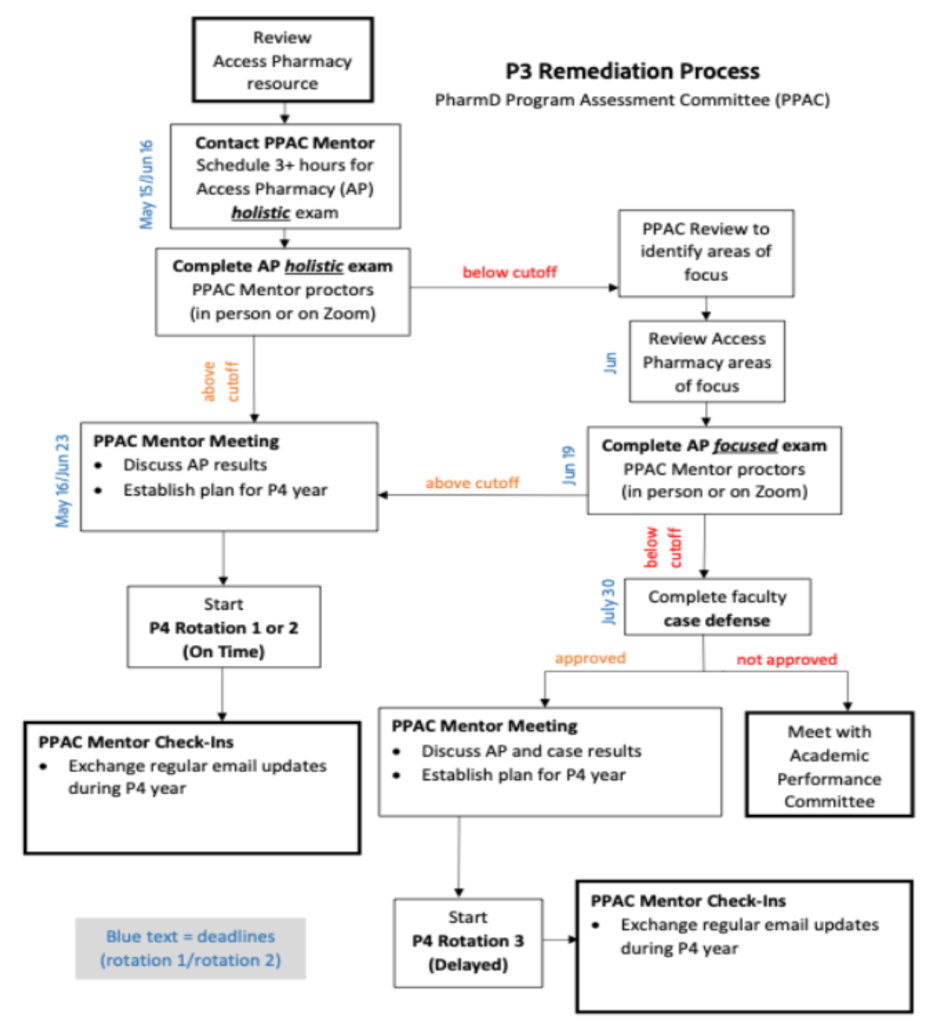
At the University of Texas at Austin College of Pharmacy, the stakes increase throughout the remediation process for pharmacy students as they advance in the curriculum, with milestone exams administered from P1 through P4 year. Early exams carry low stakes and typically result only in an advising meeting if performance is below expectations as defined by each class’s scores. By the P3 year, students who underperform on the milestone exam or score below 75% on two or more Pharmacotherapy final exams enter a formal remediation pathway overseen by the PharmD Program Assessment Committee (PPAC). The process begins with a student’s independent review of pharmacotherapy topics through McGraw Hill’s NAPLEX Review Guide, followed by a proctored holistic exam utilizing the quizzes from this source. If the score falls below the cutoff, PPAC identifies targeted areas for improvement, leading to focused review and a second exam. Students who fail their second attempt complete a verbal case defense with faculty. Those who pass meet with their mentor to plan for the P4 year, while others are referred to the Academic Performance Committee. Depending on when remediation is completed, students may begin P4 rotations on time or experience a delay. Overall, the structure is designed to be rigorous yet supportive, helping students strengthen foundational knowledge and prepare for practice.
Evaluating Impact
Knowing our processes and the end goal of influencing preparedness and emotional experience, we wanted to evaluate the effectiveness of this process and its impact on student well‑being. A survey was distributed to all students who completed remediation between 2022 and 2025. The survey explored students’ emotional experiences throughout the remediation process, asking whether they felt supported and how their well‑being was affected when they were first identified, as they moved through each stage, and after completing the process and continuing in the curriculum. Items evaluated both quantitative and qualitative aspects of the remediation process.
The survey also assessed how well the process prepared them for their Advanced Pharmacy Practice Experiences (APPE), NAPLEX, and other milestone exams. Lastly, the effectiveness of AccessPharmacy, the tool used to prepare and assess the students who were identified, was assessed.
Key Findings
- Confidence & Resilience Grew: Students reported increased resilience, confidence, and preparedness for various milestone exams as well as APPE rotations after completing the process. (Fig. 1)
- Engagement Increased: Student motivation and engagement increased throughout the process, contributing to a positive experience for most participants. (Fig. 2)
- Faculty Mentorship Matters: Faculty mentorship was consistently viewed as positive and beneficial across all graduating classes. (Fig. 3)
- Room for Improvement: The learning platform used (AccessPharmacy) tended to promote memorization rather than deep learning.
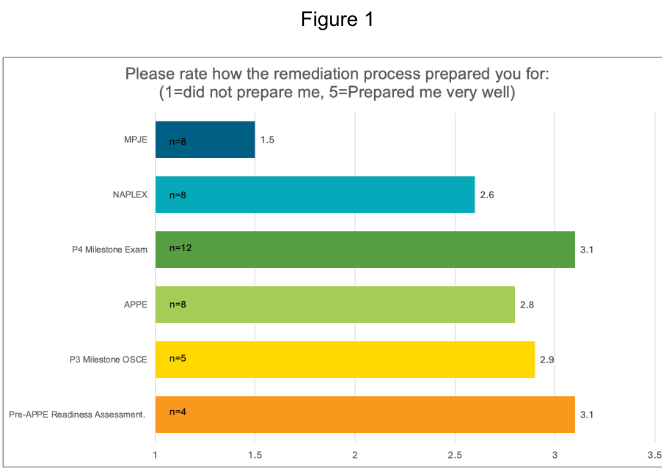
(Figure 1 – The remediation process supported students’ preparation for their P4 Milestone Exam as well as the Pre-APPE Readiness Assessment, while showing some evidence of a positive impact on APPE preparedness.)
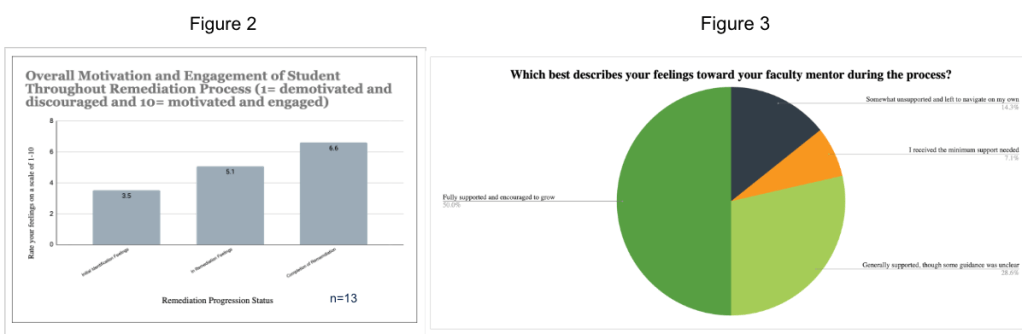
| (Figure 2 – As students progressed through the remediation process, their engagement and motivation increased almost twofold. We credited this to the support given from the administration and the one-on-one faculty support.) | (Figure 3 – Over 75% of respondents showed a positive response to some degree about their faculty mentor and the impact they had on them during the remediation process.) |
In Summary
ACPE encourages remediation while allowing programs flexibility in designing approaches that best support student learning. At The University of Texas at Austin College of Pharmacy, remediation follows a structured, escalating process that pairs independent review with individualized faculty mentorship to help students strengthen foundational knowledge and progress confidently through the curriculum. Overall, this structured approach was viewed as supportive and effective, fostering greater confidence and preparedness for advanced practice experiences and critical academic milestones.
Join the Conversation
How does your program implement remediation for students before APPEs? Share your strategies and insights in the comments below!
References:
- Schroeder MN, Hoarty C, Cain J, et al. Blending early warning and remediation processes to facilitate student success. Am J Pharm Educ. 2025;0(0):101420. doi:10.5688/ajpe101420.
- Harmon KS, Gonzales AD, Fenn NE III. Remediation and reassessment methods in pharmacy education: A systematic review. Curr Pharm Teach Learn. 2021;13(2):81-90. doi:10.1016/j.cptl.2020.07.005.
- Stratton TP, Janetski BK, Ray ME, Higginbotham MC, Lebovitz L, Martin BA. Detection of academic early warning signs and effective intervention “takes a village.” Am J Pharm Educ. 2022;86(7):8743. doi:10.5688/ajpe8743.
Jaxon Carter is a fourth year pharmacy student at The University of Texas at Austin College of Pharmacy. Educational scholarship interests include mental wellness in academics and curriculum effectiveness. In his free time, Jaxon enjoys running, trying new restaurants, and spending time with his wife and dog.
Ashley Castleberry, PharmD, MAEd is a Clinical Professor of Pharmacy Practice and Assistant Dean for Curriculum and Assessment at The University of Texas at Austin College of Pharmacy. Educational scholarship interests include metacognition, assessment, and qualitative research. In her free time, Ashley enjoys cooking and spending time with her family.


Renee Acosta is the Senior Associate Dean for Academic Affairs and Clinical Professor at The University of Texas at Austin College of Pharmacy. Renee’s educational scholarship interests include factors that impact pharmacy school admission, and student progression and academic success. In her free time, Renee’ enjoys reading, attending concerts, and spending time with her family.
Jenna Summerlin, PharmD, BCPPS is a Clinical Assistant Professor of Pharmacy Practice at The University of Texas at Austin College of Pharmacy. Her educational scholarship interests include student professional identity formation and professional development. Jenna’s interests include reading, exercising, and spending time with friends and family.

Pulses is a scholarly blog supported by a team of pharmacy education scholars.
 Pulses