
By Morgan Carhart, PharmD, BCPS, Carrie Baker, PharmD, MBA, BCPS; and Riley Bowers, PharmD, BCCP, BCPS, FNCAP
Healthcare education is increasingly team-based, with other healthcare professionals (HCPs) routinely teaching medical learners – particularly during patient care. However, these contributions are often informal and may go unrecognized. Could more intentional interprofessional teaching (IPT) strengthen both medical education and HCP collaboration?
IPT occurs when HCPs act as teachers for learners in another discipline in didactic or experiential settings, allowing trainees to capitalize on their specialized knowledge.1 Interprofessional instructors (IPIs) may or may not hold formal academic appointments. Despite the theoretical benefits of IPT in medical education, few studies have investigated the prevalence and perceptions of IPIs.
Why Recognizing IPIs as Educators Matters
Each HCP brings different perspectives to the team, and providing high-quality patient care requires an approach that leverages their expertise. Although IPIs make contributions to patient care, the educational value of these actions is not always recognized.2,3 Consider the routine clinical interactions that occur every day: a pharmacist recommends a dose adjustment to prevent an adverse drug event or a respiratory therapist recommends changes to ventilator settings. These interactions influence clinical decision-making while simultaneously providing valuable learning opportunities. Recognition of IPIs for these informal teaching contributions is an important step in integrating IPT into medical education.
Evidence from purposeful educational interventions further demonstrates the value of this approach. When programs on prescribing for final-year medical trainees were conducted by pharmacists, participants reported increased confidence and a better understanding of the role pharmacists play in medication management.4 This suggests that the educational value of IPIs is enhanced when clinical recommendations are accompanied by explanations and context. In other words, moving beyond the “what” to explain the “why” may help trainees recognize informal clinical interactions as meaningful education.
To better characterize perceptions of medical trainees, we fielded a survey to all medical students and residents in North Carolina. Of 43 respondents, 42 had experienced IPT as learners and 100% reported they could learn something from IPIs in experiential settings. Two areas where trainees identified IPIs could be most helpful were communication and medication selection/prescribing. Additional data on their perceptions is available in Figure 1.
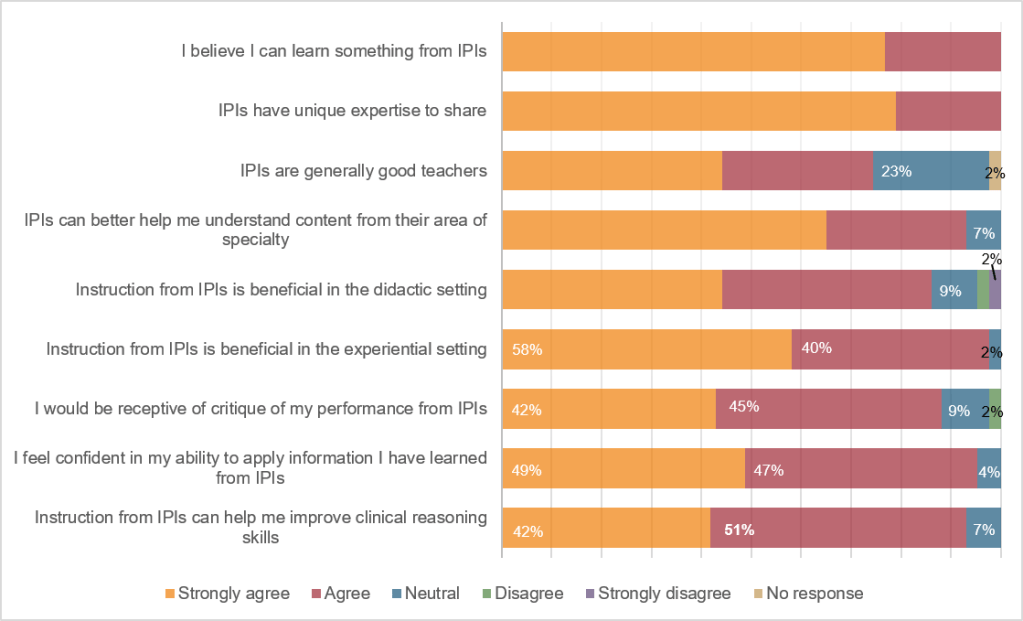
Figure 1: Responses to survey questions regarding perceptions of IPIs involved in IPT
Leaning Into Clinical Expertise
These findings suggest that today’s medical trainees are open to IPT in clinical settings and recognize the value of interprofessional perspectives. Since IPIs routinely spend time educating patients on medication and device use, IPIs can apply the same deliberate approach when teaching medical trainees. Providing additional context behind recommendations and teaching hands-on skills to trainees can allow IPIs to better position themselves as educators, even when formal teaching opportunities are not feasible.
Implications for Pharmacy Educators and Learners
As pharmacists work to expand roles in the clinical setting, showcasing their role as IPIs provides opportunities to highlight activities many pharmacists already engage in. However, expanding pharmacists’ role as IPIs requires more than clinical expertise – pharmacists must translate their knowledge to learners from different professional backgrounds. Several considerations should guide how pharmacists approach IPT in practice:
- Recognize that what other HCPs need to know may differ from what pharmacists prioritize. For medical trainees, understanding a medication’s place in therapy or key contraindications may be more valuable than learning every dosing nuance.
- Create intentional opportunities for pharmacy and medical trainees to engage. While formal IPE training may not be feasible for everyone, educators can incorporate opportunities for students and residents to engage in “peer IPT” to strengthen communication skills and encourage explanations of the “why.”
- Plan purposeful teaching activities outside of patient care. Pharmacist-led journal clubs and in-services with the medical team can provide opportunities to showcase clinical knowledge and pharmacists’ ability to evaluate literature. These more structured activities can help pharmacists gain recognition as educators and open the door for involvement in didactic settings.
- Leverage quality improvement initiatives as opportunities for education. Repetitive issues in prescribing or medication utilization can generate opportunities for targeted education.
Intentionally integrating IPIs into medical education creates meaningful opportunities to learn from the expertise of the entire team. Recognizing existing interactions as education and approaching them with the same intentionality that pharmacists bring to patient education and formal teaching can strengthen both interprofessional collaboration and the preparation of future healthcare professionals. There is a need for further research assessing the effectiveness of IPT and whether it translates into better learner outcomes and, ultimately, patient care.
References:
- Petri CR, Anandaiah A. The case for interprofessional teaching in graduate medical education. ATS Sch. 2021;3(1):20-26. doi:10.34197/ats-scholar.2021-0091PS
- Soones TN, O’Brien BC, Julian KA. Internal medicine residents’ perceptions of team-based care and its educational value in the continuity clinic: A qualitative study. J Gen Intern Med. 2015;30(9):1279-1285. doi:10.1007/s11606-015-3228-3
- Petri CR, Beltran CP, Sullivan AM, Anandaiah A. Who is teaching residents in the intensive care unit? Perceptions of interprofessional teaching at an academic medical center. ATS Sch. 2023;4(3):320-331. doi:10.34197/ats-scholar.2023-0008OC
- Newby D, Stokes B, and Smith AJ. A pilot study of a pharmacist-led prescribing program for final-year medical students. BMC Med Educ. 2019;19(54). doi: 10.1186/s12909-019-1486-1
Author Bio(s):
Morgan Carhart, PharmD, BCPS is a Clinical Assistant Professor at the University of Oklahoma College of Pharmacy. Educational scholarship interests include interprofessional collaboration and assessment. In her free time, Morgan enjoys reading and crocheting.
Carrie Baker, PharmD, MBA, BCPS is a Clinical Assistant Professor of Pharmacy Practice at the Campbell University College of Pharmacy and Health Sciences. Educational scholarship interests include the scholarship of teaching and learning, curriculum and assessment, and interprofessional education. In her free time, Carrie enjoys fitness and spending time with her family.
Riley Bowers, PharmD, BCPS, BCCP, FNCAP is the Director of Assessment and Associate Professor of Pharmacy Practice at the Campbell University College of Pharmacy and Health Sciences. His educational scholarship interests include the scholarship of teaching and learning, curriculum and assessment, and interprofessional education. In his free time, Riley enjoys fishing and spending time with his family.
Pulses is a scholarly blog supported by a team of pharmacy education scholars.
 Pulses