By: Michael Gonyeau, BS Pharm, PharmD, MEd, FNAP, FCCP, BCPS
Have you ever been frustrated by a student who ignored your email, arrived late to class, or asked you to accept a late assignment? Now flip the question. Have you ever been late to a meeting, posted course materials after the date in your syllabus, or turned in exam questions past the deadline? If you answered yes to both, we are in the same boat.
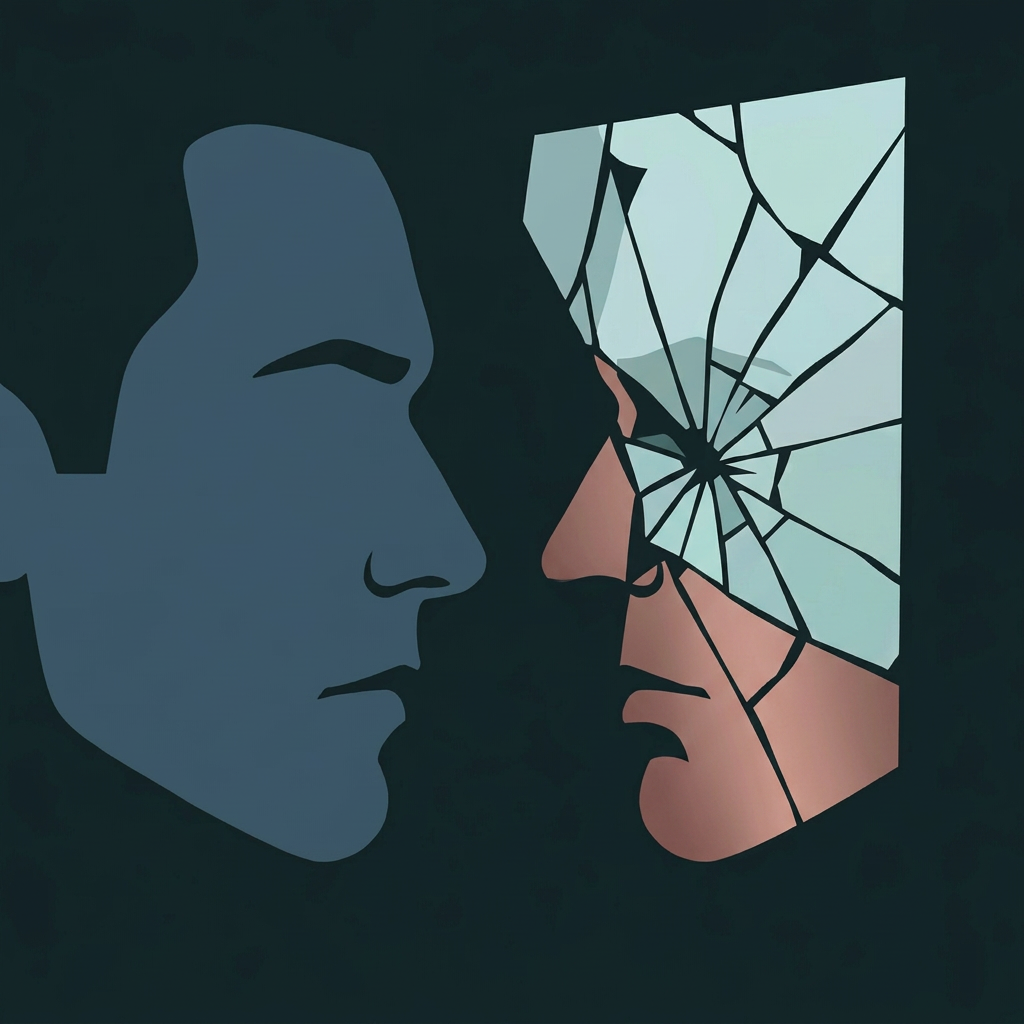
The ACPE Standards 2025 require our graduates to demonstrate professionalism, defined as the ability to “exhibit behaviors and values that are consistent with the trust given to the profession by patients, other health care providers, and society.”1 Yet the standards we teach and the standards we practice as faculty do not always match. In a recent AJPE commentary, I examined these disconnects in detail. Here, I invite you to look in the mirror with me.
The Judgment Paradox
We ask students to make difficult clinical judgments, yet we sometimes avoid difficult professional judgments ourselves. Consider the faculty member who notices chronic tardiness or dismissive responses to feedback in a student but never documents the concern or addresses it directly, citing discomfort with conflict. Or the evaluator who passes a student who met a minimum score despite clear lapses in professional judgment.
Efforts to support student wellbeing, however well intended, can also lead us to soften necessary feedback. Compassionate delivery matters but avoiding difficult truths does not build resilience; it models avoidance.
Daily Double Standards
Smaller, everyday inconsistencies may shape student professional socialization most, because they happen in the routine interactions they observe. Review the table below and count how many behaviors you recognize in yourself. I will go first: I have done more of these than I care to admit.
Table 1. Student expectations and the faculty behaviors that undercut them
| What we expect of students | What we sometimes model |
| Submit work on time or lose points | Return graded work weeks late and miss grade submission deadlines |
| Avoid AI tools or face misconduct charges | Use AI to write quiz questions, assignments, and rubrics |
| Send formal, timely emails | Reply days later, or not at all |
| Arrive prepared and organized | Improvise lectures and arrive without needed materials |
The message students receive is clear: accountability depends on power, not professional standards. This creates a hidden curriculum in which what students observe contradicts what we explicitly teach.2
Faculty Evaluation Falls Short
We assess student professionalism with validated instruments and require remediation for deficiencies. Faculty evaluation rarely matches that rigor. Annual reviews tend to emphasize grants, publications, and teaching load rather than conduct, and student ratings of faculty have been criticized as unethical because they conflate consumer satisfaction with teaching effectiveness.3 ACPE Standard 1.5 sets expectations for respect, integrity, and professionalism across the entire academic community, yet programs likely rarely examine this when preparing for accreditation.
Why does this matter? Professional identity forms through exposure to authentic role models.4 When students see gaps between our stated values and our behavior, they learn that professional standards are situational rather than absolute. That lesson follows them onto rotations and, ultimately, into patient care.
What I Am Trying
Role modeling shapes students largely without their awareness, which is why Cruess and colleagues urge us to make the implicit explicit.5 So when I miss a commitment, such as posting grades by the date I promised, I now tell students what happened, take ownership, and commit to doing better. I also need to be more accepting when students face similar issues so as not to set a double standard.
We are lucky to have a long-standing peer observation and evaluation system at my institution. At least twice a year, I invite a colleague to observe my teaching using the peer observation tool we developed, asking for specific feedback on my preparation, punctuality, and how I respond to students, not just content delivery.
A Call to Action
Closing these gaps requires individual and institutional commitment. Programs can:
- Adopt faculty professionalism standards equivalent to those we hold students to, including structured reflection and assessment with validated tools.
- Gather feedback from students, colleagues, and staff on professional behavior.
- Build accountability for unprofessional conduct into annual reviews and promotion and tenure procedures.
- Align faculty development with the competencies we require of students: reflection, accountability, continuous improvement, and ethical decision making.
University culture shapes how we work and how we are held accountable when things go wrong, so meaningful reform must also engage our colleges and universities, not only our pharmacy programs.
We can continue to perpetuate these double standards, or we can commit to the difficult work of aligning our practice with what we teach. For the sake of our profession and the patients our graduates will serve, I hope we choose the harder path.
I am a hypocrite. Are you?
References (in AMA style):
- Accreditation Council for Pharmacy Education. Accreditation standards and key elements for the professional program in pharmacy leading to the doctor of pharmacy degree (“Standards 2025”). Published July 1, 2024. Updated June 12, 2025. Accessed December 3, 2025. https://www.acpe-accredit.org/wp-content/uploads/ACPEStandards2025.pdf
- Hafferty FW, Franks R. The hidden curriculum, ethics teaching, and the structure of medical education. Acad Med. 1994;69(11):861-871. doi:10.1097/00001888-199411000-00001
- Close D. Why student ratings of faculty are unethical. J Acad Ethics. 2024;23(3):523-545. doi:10.1007/s10805-024-09562-3
- Mylrea MF, Gupta TS, Glass BD. Professionalization in pharmacy education as a matter of identity. Am J Pharm Educ. 2015;79(9):142. doi:10.5688/ajpe799142
- Cruess SR, Cruess RL, Steinert Y. Role modelling: making the most of a powerful teaching strategy. BMJ. 2008;336(7646):718-721. doi:10.1136/bmj.39503.757847.BE
Author Bio(s):

Michael Gonyeau, BS Pharm, PharmD, MEd, FNAP, FCCP, BCPS, is a Clinical Professor at the School of Pharmacy and Pharmaceutical Sciences, Bouvé College of Health Sciences, Northeastern University. Educational scholarship interests include curriculum development, competency-based education, and the evolving role of faculty and generative artificial intelligence in professional education. In his free time, Dr. Gonyeau enjoys singing karaoke and hiking with his Shiba Inus. He has also been a hypocrite in many ways during his tenure and tries every day to improve.
Claude from Anthropic was used to apply Pulses blog author guidelines and condense some sections to stay within the word limit. I reviewed and edited the content and take full responsibility for its accuracy
Pulses is a scholarly blog supported by a team of pharmacy education scholars.

